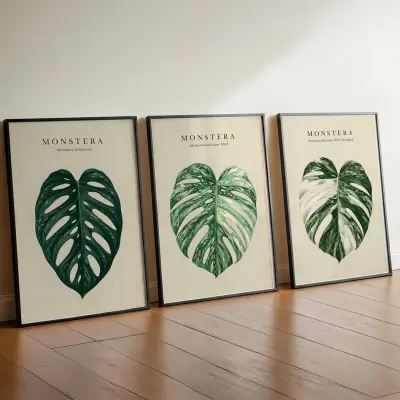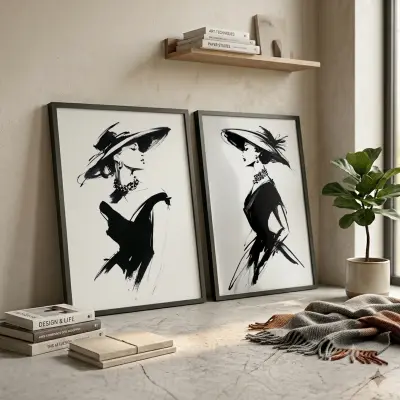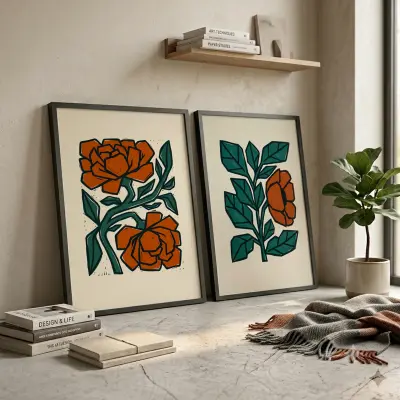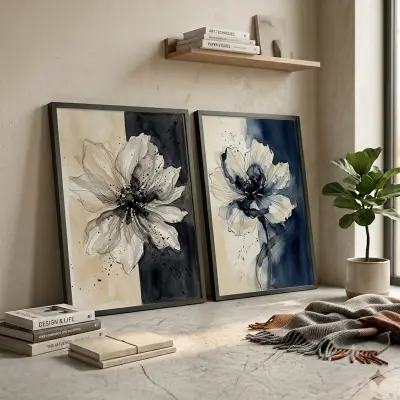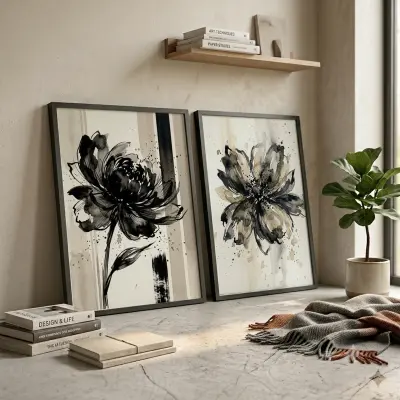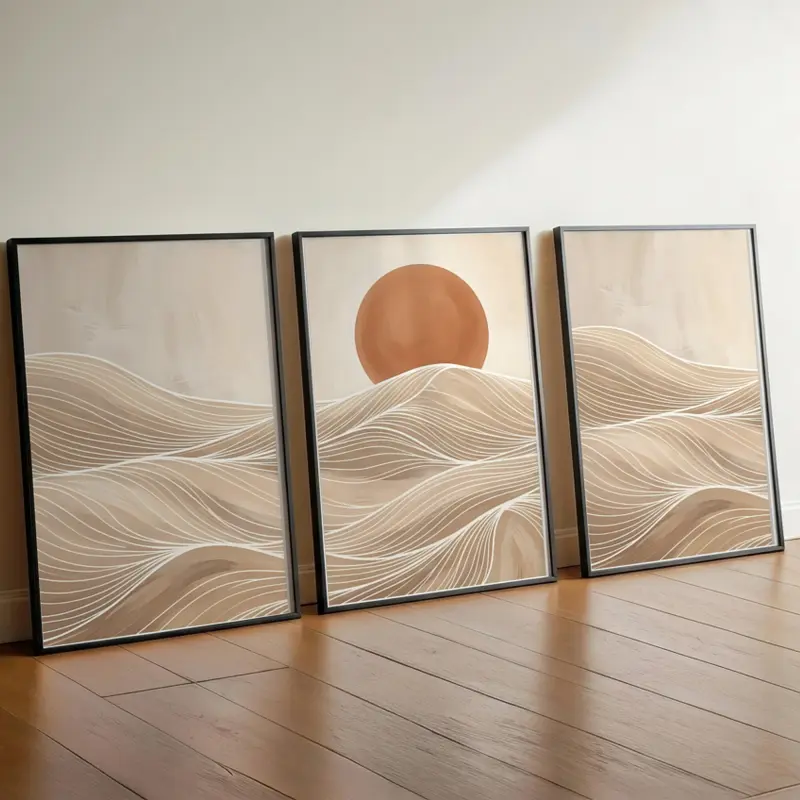
A gallery wall turns an empty surface into the most personal spot in your home. To make it look cohesive rather than random, a little planning goes a long way. Follow these six steps and you'll get it right first time.
1. Measure the wall and space
Start by measuring the area the gallery wall should cover – not the whole wall. Above furniture there's a simple rule of thumb: the gallery wall should take up about two-thirds to three-quarters of the furniture's width. For a 2.10 m sofa, that's roughly 1.40 to 1.60 m.
2. Find the right height
The most common mistake: hanging pictures too high. In galleries, the centre of the group sits at about 145 to 155 cm (57–61 inches) – roughly eye level. Above a sofa, sideboard or bed, leave about 20 to 30 cm (8–12 inches) between the furniture and the bottom of the lowest frames so they read as one unit.
3. Choose a layout
A few basic layouts have proven themselves:
- Grid: frames of the same size in rows and columns with identical gaps. Calm, modern and tidy – ideal with our poster sets.
- Salon style: lots of formats mixed closely together. Lively and collected over time. Key: keep the gaps even so it doesn't look chaotic.
- Aligned edge: all pictures share a common top or bottom line – especially nice above long furniture.
- Centre line: pictures of different sizes are centred on an imaginary horizontal line.
4. Set the spacing
A gap of 5 to 8 cm (2–3 inches) between frames works well. More important than the exact number is keeping it the same everywhere – then the wall reads as one picture. With very large formats, the gap can be a little wider.
5. Test with paper templates
Before you hammer in a single nail: cut a piece of kraft paper or newspaper to the size of each frame, label it and stick it to the wall with painter's tape. That way you can live with the layout for a few days and move things around until it's right. Mark the hanger position directly on each template – then you'll know exactly where the nail goes.
Don't want to drill at all? Our guide „How to Hang Posters Without Nails: 7 Methods Compared“ has alternatives.
6. Find a common thread
What makes a gallery wall look harmonious is a connecting element. That can be:
- A colour palette: for example warm earth tones from our brown/beige and red/orange categories, or a calm mix in black and white. You'll find every colour under posters by colour.
- A theme: such as botanical, travel or vintage art.
- Matching frames: identical frames calm even a colourful mix of motifs. Many of our posters are available ready-framed in black, white, light wood or dark wood.
A tip to get started: choose an anchor piece – the largest or most striking print – and place it slightly off-centre. Then group the other pictures around it.
The right wall for every room
In the living room, your gallery wall can be large and varied. In the bedroom, a few calm prints above the bed work best. In hallways and stairwells, follow the slope of the stairs with a shared centre line, and in the kitchen, two or three small formats add character.
Which formats suit which spot is explained in detail in our poster size guide.