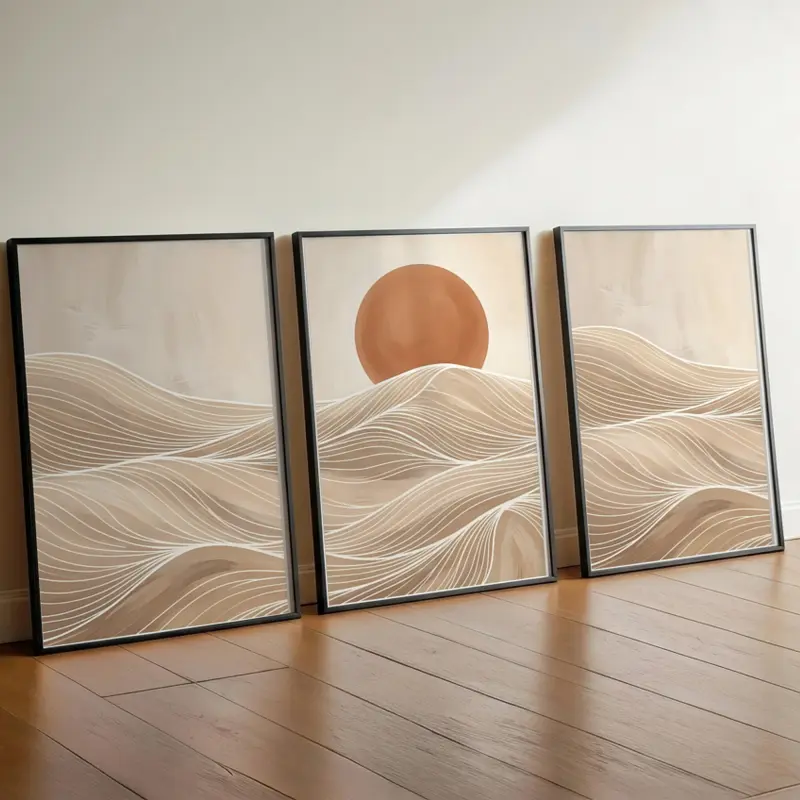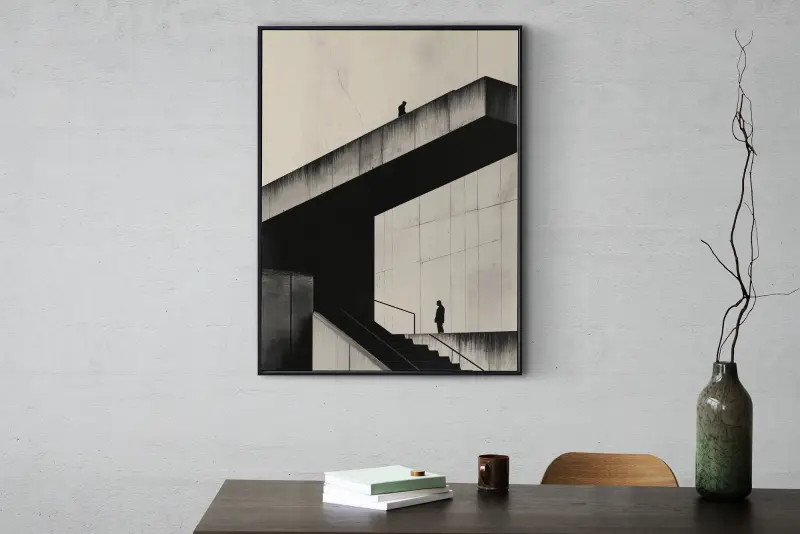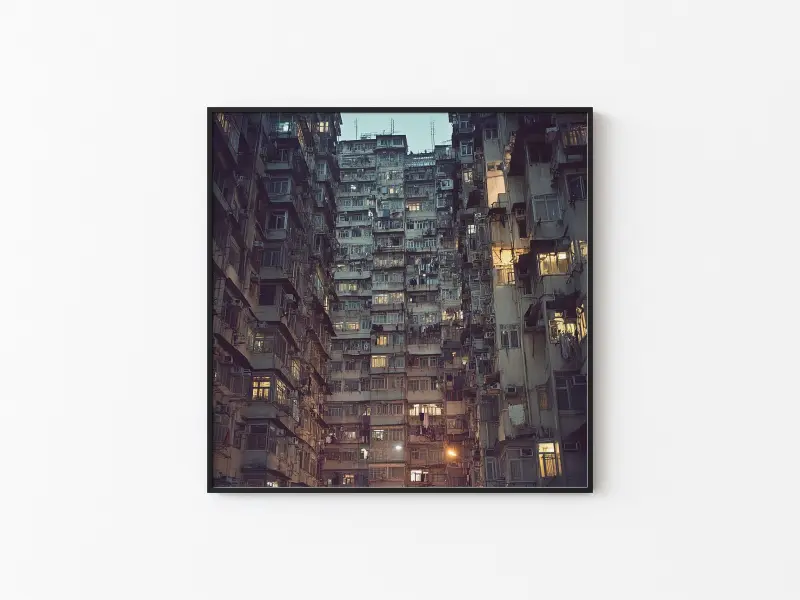
You've found the motif – but what size should it be? A poster that's too small gets lost on a large wall, one that's too big overwhelms a small room. In this guide you'll learn which poster sizes exist, which format goes where and what to look out for when framing.
Common poster sizes
At Poster Home Gallery, the available sizes depend on the motif – whether it's portrait, landscape or square. These are the formats you'll find with us:
| Size | Format | Works well for |
|---|---|---|
| 15 × 20 cm (6 × 8″), 21 × 29.7 cm (8 × 12″) | small | shelves, desks, window sills, filling gaps in a gallery wall |
| 27 × 35 cm (11 × 14″), 30 × 45 cm (12 × 18″), A3 | medium | gallery walls, hallways, kitchens, bathrooms, small wall areas |
| 40 × 60 cm (16 × 24″), A2, 50 × 70 cm (20 × 28″) | large | a single print above a dresser or desk, pairs above the bed |
| 60 × 90 cm (24 × 36″) | extra large | a statement piece above the sofa or bed, large empty walls |
| 25 × 25 to 70 × 70 cm (10 × 10″ to 28 × 28″) | square | grid gallery walls, modern and graphic motifs |
| 45 × 30 to 90 × 60 cm (18 × 12″ to 36 × 24″) | landscape | landscapes and panoramas above wide furniture |
You can see which sizes are available for a specific motif right on its product page.
Rules of thumb: how big should the poster be?
- Above furniture: the picture – or group of pictures – should cover about two-thirds to three-quarters of the furniture's width. Above a 2 m sofa, a single 40 × 60 poster looks lost; better options are a 60 × 90 format, two large posters side by side or a gallery wall.
- Above the bed: one large landscape print or two to three equal portrait prints side by side form a calm unit with the headboard.
- On open walls: the further away you stand, the bigger the picture can be. Medium formats are enough for a narrow hallway; in a large living room, the wall can take 60 × 90 cm.
- Small rooms: one large picture is better than many small ones – it looks calmer and often even makes the room feel bigger.
Aspect ratios: why 2:3 doesn't fit every frame
Poster sizes follow different aspect ratios, and that matters when buying a frame:
- 2:3 – 30 × 45, 40 × 60 and 60 × 90 cm. The classic photo format, ideal for photography and tall portrait prints.
- A-series (1:1.41) – A3 and A2. Very common; frames are available almost everywhere.
- Other portrait formats such as 50 × 70 or 27 × 35 cm are slightly squatter.
- 1:1 – square formats for graphic, modern motifs.
So a 40 × 60 poster won't simply fit a 50 × 70 frame. Either choose a frame with a matching mount – or order the poster ready-framed: many of our motifs are available in black, white, light wood or dark wood frames.
Combining sizes in a gallery wall
For a harmonious gallery wall, combine one large anchor piece (e.g. 50 × 70 or 60 × 90 cm) with several medium and small formats. If you prefer a calmer look, use the same size throughout – our poster sets are designed for exactly that. How to arrange them is explained in „How to Plan a Gallery Wall in 6 Steps“.
The right size for every room
- Living room: large formats from 50 × 70 cm or a gallery wall above the sofa.
- Bedroom: one large landscape print or a pair of equal portrait prints above the bed.
- Kitchen and bathroom: medium formats like 30 × 45 cm or A3 – they also fit narrow stretches of wall.
- Home office: a medium to large print in view behind or beside the desk.
- Nursery: medium formats at the child's eye level.
And if you want to hang your poster without a drill: „How to Hang Posters Without Nails: 7 Methods Compared“.